 EN
EN

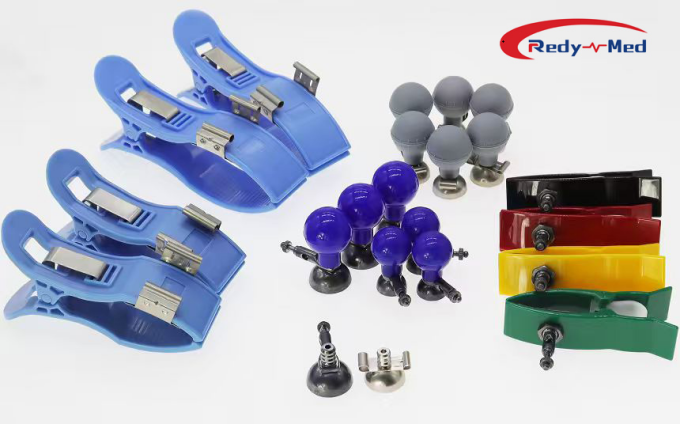
How Limb Clamps Enable Accurate Non-Invasive Blood Pressure Monitoring
Oscillometric principle and the critical role of controlled limb occlusion
NIBP monitoring works through what's called the oscillometric method. Basically, when the cuff inflates and deflates around an arm or leg, it picks up those tiny pulses in the arteries as pressure changes. Specialized limb clamps help out here by applying just the right amount of pressure to block blood flow temporarily. These clamps need to be pretty accurate since they're working with such delicate measurements. The way these devices compress blood vessels lets them spot three key readings: systolic pressure at its highest point, diastolic pressure when the pulse starts dropping off quickly, and mean arterial pressure which is calculated from the strongest pulse signal. Modern clamps are designed to stay stable even if someone moves a bit, which cuts down on errors caused by movement. Traditional cuffs can have problems with motion artifacts, leading to about 15 to 20 percent error rates in readings. That's why getting good mechanical stability matters so much for capturing clean waveforms.
Clinical performance: FDA-cleared systems and validation against invasive references
Limb clamp systems approved by the FDA have been tested against invasive arterial lines, which remain the gold standard for hemodynamic monitoring. Clinical studies at multiple centers showed these non-invasive systems matched mean arterial pressure readings within about 5 mmHg for around 90% of patients after proper calibration. The best results come when blood pressure stays within normal ranges (roughly 70 to 110 mmHg). When dealing with very high or low blood pressures, differences might reach 8 to 12 mmHg, something we expect based on how oscillometric technology works. Every device cleared by the FDA must meet ISO 80601-2-51 standards. This means regular pressure calibration checks once per year and using materials safe enough not to damage skin during those repeated clamping actions that happen during monitoring sessions.
Limb Clamp Applications in Peripheral Perfusion and Microvascular Assessment
Dynamic occlusion–release protocols for quantifying capillary refill time and reperfusion kinetics
Limb clamps help standardize microvascular assessments through controlled pressure application and release cycles that measure capillary refill time (CRT) along with reperfusion patterns. Doctors typically press down with calibrated force to block blood flow for around 3 to 5 seconds before quickly letting go while watching how the skin responds. Capillary refill time basically measures how long it takes for skin color to return to normal after pressure is removed. This has been shown to indicate peripheral blood flow issues when CRT exceeds 2 seconds, which can signal problems in patients suffering from shock or sepsis. For reperfusion measurements, additional tools such as laser Doppler flowmetry track changes in blood movement speed following occlusion, helping spot endothelial problems. Research indicates that these methods catch signs of worsening circulation conditions about 57 percent quicker than regular vital sign checks in intensive care units. This provides immediate, non-invasive information without needing invasive arterial lines.
Design and Safety Standards Governing Modern Limb Clamp Performance
ISO 80601-2-51 compliance: Materials, pressure calibration, and patient interface safety
Limb clamps today follow ISO 80601-2-51 standards, which is basically the rulebook for medical devices used in non-invasive blood pressure monitoring. When manufacturers stick to these guidelines, they have to use materials that won't irritate skin, especially important when patients need clamps for extended periods. The pressure settings also need to match national standards and get checked at least twice a year. Components that touch patients go through strict testing for heat resistance, electrical protection, and structural strength. Safety isn't just a box to check either. Most modern designs come with built-in systems that limit how much force gets applied, smooth edges that protect tissues from damage, and pressure limits set to keep nerves safe from compression injuries. Looking at recent data from 2023, hospitals using ISO certified clamps saw a dramatic drop in problems caused by faulty equipment or improper use, down around 93% compared to older models that didn't meet these requirements.
Integration with NIBP and perfusion monitors: Signal fidelity and interoperability requirements
Getting these devices to work smoothly with non-invasive blood pressure monitors and perfusion systems requires really good signal quality and proper compatibility between different equipment. The limb clamps need to keep signal delay under 5 milliseconds when they inflate and deflate, otherwise the waveforms get messed up. For digital connections, following the IEC 60601-1-8 standard is essential for alarms and transferring data properly. Also important are electromagnetic compatibility issues and keeping background noise down below 40 decibels so everything works reliably in all kinds of hospital settings. Proper integration means signal distortion stays under 2 percent most of the time, which helps doctors get consistent perfusion readings even when patients move around during tests.
Limitations and Emerging Frontiers for Limb Clamp Technology
While limb clamps deliver essential physiological monitoring capabilities, clinical and technological boundaries reveal opportunities for innovation. These devices must evolve to overcome persistent physiological challenges while integrating new analytical approaches.
Clinical caveats: Accuracy challenges in edema, vasospasm, and obesity
When there's excess fluid buildup from edema, it messes up how pressure is measured, causing unpredictable squeezing forces and making those blood pressure waveform readings unreliable. Conditions that cause blood vessels to spasm change how they normally respond to blood flow, which throws off what we expect to see when releasing clamps on arteries. For people who are obese, signals get weakened as they pass through fatty tissue. Studies show that arms larger than 42 cm in circumference tend to have measurements that drift by more than 15 mmHg. Clinicians working with these patients need to cross check those clamp-based numbers against other methods or even consider invasive monitoring techniques if the situation demands it for accurate diagnosis and treatment planning.
AI-enhanced analytics: Detecting hemodynamic deterioration via occlusion-recovery latency trends
Limb clamp technology is getting smarter thanks to machine learning algorithms that look at how occlusion-recovery waveforms change over time. Traditional methods just check against fixed numbers, but AI goes deeper by finding patterns in blood flow recovery after clamping. These smart systems analyze things like how long it takes for blood vessels to refill, the ups and downs in refill speed, and the actual shape of the recovery curve. Early tests show promising results - systems built this way spot problems about 25 percent sooner than old fashioned alert methods. What used to be simple measuring devices are becoming something else entirely now. Doctors can monitor patients continuously instead of waiting for readings, all because of these waveform analysis techniques that make sense of subtle changes in blood flow patterns.
FAQ
What is the main function of limb clamps in medical monitoring?
Limb clamps primarily help in non-invasive blood pressure monitoring by applying controlled pressure to block and release blood flow, thus allowing for accurate measurement of systolic, diastolic, and mean arterial pressure.
Why is ISO 80601-2-51 compliance important for limb clamps?
Compliance with ISO 80601-2-51 ensures the use of materials safe for patients, accurate pressure calibrations, and safety measures that protect tissues and nerves from compression injuries.
How do obesity and edema affect the accuracy of readings taken with limb clamps?
Obesity and edema can cause inaccurate pressure readings due to weakened signals passing through fatty tissue or unpredictable squeezing forces caused by excess fluid buildup, respectively.
What advancements have been made in limb clamp technology with AI?
AI has enhanced limb clamp technology by introducing machine learning algorithms that detect patterns in occlusion-recovery waveforms, allowing for earlier detection of hemodynamic deterioration.