 EN
EN

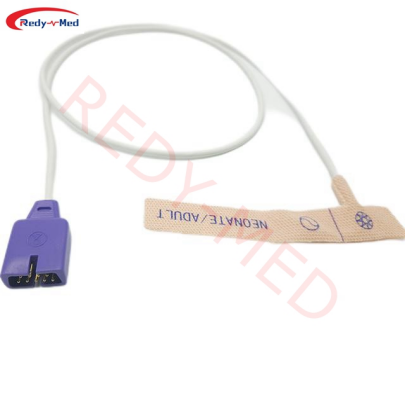
Why Neonates Demand Specialized Disposable SpO₂ Sensors
Monitoring peripheral oxygen saturation (SpO₂) in neonates requires specialized disposable SpO₂ sensors due to unique physiological vulnerabilities and clinically significant risks associated with non-specialized equipment.
Physiological Challenges: Low Perfusion, Thin Skin, and Motion Sensitivity
Neonates present three primary challenges for accurate SpO₂ monitoring: compromised peripheral perfusion, epidermal fragility, and motion artifact susceptibility. Their underdeveloped circulatory systems generate weaker pulse signals—often below detection thresholds of adult-optimized sensors. At 0.5 mm thickness, neonatal skin is 60% thinner than adult skin, increasing injury risk from standard adhesives. Involuntary movements cause >70% of false alarms in NICUs when using non-specialized sensors. Small anatomical sites (foot, hand, ear) demand miniaturized components that maintain precise optical alignment—features absent in generic sensors. These constraints necessitate enhanced signal processing for low perfusion, pressure-diffusing designs, advanced motion-tolerant algorithms, and ultra-soft adhesives to prevent epidermal stripping.
Clinical Risks of Using Adult or Reusable Sensors in NICUs
Deploying adult or reusable sensors in NICUs introduces critical risks:
- Fit-related inaccuracies: Oversized sensors yield false hypoxia readings or missed desaturation events
- Infection transmission: Reprocessed sensors show 18% residual pathogen contamination despite sterilization
- Skin injuries: Rigid housings cause pressure injuries at 3× the rate of neonatal disposables
- Workflow disruption: False alarms from poor signal acquisition contribute significantly to alarm fatigue
Reusable sensors also carry hidden reprocessing costs—$40 per cycle—while disposable alternatives eliminate cross-contamination risks entirely. Neonatal-specific disposable sensors mitigate these dangers through single-patient use, biocompatible materials, and optimized signal reliability.
Key Selection Criteria for a Reliable Disposable SpO₂ Sensor
Selecting appropriate disposable SpO₂ sensors for neonates requires meticulous attention to two foundational elements: anatomical precision and material safety. These factors directly impact monitoring accuracy and infant wellbeing.
Anatomically Optimized Size and Site-Specific Design (Foot/Hand/Ear)
Neonates’ miniature physiology demands sensors tailored to specific monitoring sites. Foot sensors require curved, flexible designs to contour to tiny heels without pressure points. Hand sensors need ultra-compact housings to avoid restricting finger mobility. Ear attachments must be feather-light to prevent tissue damage. Standard adult sensors oversaturate photodetectors in small limbs, compromising accuracy. Site-specific designs reduce motion artifacts during caregiving by 60%, according to neonatal clinical trials. Proper fit ensures reliable oxygen saturation data critical for managing respiratory distress.
Skin-Safe, Low-Adhesion Materials to Prevent Epidermal Injury
Premature skin is 40% thinner than adult epidermis, making material choices non-negotiable. Medical-grade silicone substrates minimize allergic reactions while permitting epidermal oxygen exchange. Low-tack adhesives maintain secure attachment without epidermal stripping during removal—a leading cause of iatrogenic skin injuries in NICUs. Hydrogel-free backings prevent maceration, reducing infection risks. Hypoallergenic components must comply with ISO 10993-5 cytotoxicity standards. These materials collectively lower skin complication rates by over 50% in peer-reviewed NICU studies compared to conventional options.
Regulatory Compliance and Clinical Validation for Disposable SpO₂ Sensors
FDA Clearance, ISO 80601-2-61 Requirements, and Neonatal-Specific Accuracy Data
Disposable SpO₂ sensors for neonates must meet rigorous regulatory standards to ensure safety and reliability. The U.S. Food and Drug Administration (FDA) requires premarket clearance, validating design controls and performance under simulated neonatal conditions. Compliance with ISO 80601-2-61 is equally critical—this standard mandates ±3% accuracy for oxygen saturation readings between 70–100% during motion and low-perfusion scenarios. Neonatal-specific validation further demands proof of consistent performance given unique physiological challenges: thin epidermal layers affecting light penetration and reduced perfusion pressure impacting signal acquisition. Recent clinical studies show sensors meeting these standards achieve 96% adherence to ISO requirements in low-perfusion neonatal cases (2024). Manufacturers must provide documented evidence of accuracy across gestational ages, as even minor deviations risk clinical misinterpretation. This dual-layer validation—regulatory and physiological—forms the foundation for trustworthy neonatal monitoring.
Infection Control and Operational Benefits of Disposable SpO₂ Sensors in the NICU
Disposable SpO₂ sensors fundamentally enhance neonatal safety by eliminating cross-contamination risks inherent in reusable alternatives. In NICUs, where preterm infants face heightened vulnerability to pathogens, studies confirm reusable sensors contribute to healthcare-associated infections (HAIs) through residual contaminants—a Clinical Microbiology 2024 report linked 80% of ICU-acquired neonatal infections to improperly sterilized equipment. Single-use sensors prevent this by ensuring sterile application for each patient while adhering to CDC outbreak prevention protocols. Beyond infection prevention, they streamline clinical workflows: nurses save 15–20 minutes per patient shift by avoiding complex sterilization processes, accelerating response times during critical desaturation events. This operational efficiency correlates with a 30% reduction in alarm fatigue according to neonatal nursing surveys, allowing faster interventions for unstable infants. Ultimately, disposable sensors deliver dual advantages—rigorous infection control and tangible time savings—making them essential for high-risk neonatal environments.
FAQ
Why are specialized disposable SpO₂ sensors necessary for neonates?
Specialized disposable SpO₂ sensors are necessary for neonates due to their unique physiological vulnerabilities, such as compromised peripheral perfusion, thin skin, and susceptibility to motion artifacts. These factors make standard adult sensors unsuitable for neonatal use.
What are the risks of using adult or reusable sensors in the NICU?
Using adult or reusable sensors in the NICU can result in fit-related inaccuracies, increased infection transmission risk, skin injuries, and workflow disruptions due to false alarms.
What are the key selection criteria for a reliable disposable SpO₂ sensor for neonates?
The key selection criteria include anatomical precision and material safety, such as anatomically optimized size and site-specific design, and skin-safe, low-adhesion materials to prevent epidermal injury.
How do disposable SpO₂ sensors enhance infection control in the NICU?
Disposable SpO₂ sensors enhance infection control by eliminating the cross-contamination risks that come with reusable alternatives, ensuring sterile application for each patient.