 EN
EN

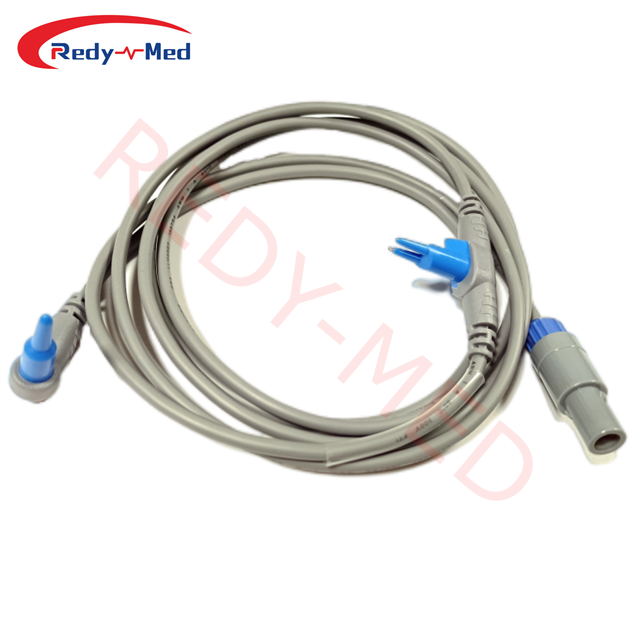
How Medical Temperature Probes Achieve Sub-0.1°C Clinical Precision
Thermistor and RTD Physics: Why Material Stability Enables Long-Term Accuracy
The medical field relies heavily on temperature probes that work through either thermistors or Resistance Temperature Detectors (RTDs) to get those accurate readings doctors need. Thermistors basically take advantage of semiconductor materials that change resistance predictably as temperatures fluctuate. On the other hand, RTDs typically use pure platinum because it responds to temperature changes in a very linear and repeatable way. The big challenge comes down to keeping these devices accurate over time. Materials need to withstand all sorts of things like oxidation from air exposure, going through countless heating and cooling cycles, dealing with physical stress during handling, and surviving repeated sterilizations without losing their properties. Smart manufacturers know this well, which is why they often go for annealed platinum or specially treated ceramic components. These materials can hold their calibration within about 0.03 degrees Celsius per year even after being run through hundreds of autoclave sessions. This kind of stability means no worrying about drift issues and saves hospitals from constantly recalibrating equipment between thousands upon thousands of patient tests.
NIST-Validated Case Study: Neonatal ICU Probe Delivers ±0.05°C Repeatability
Research conducted at NICUs and validated by NIST showed these devices can maintain temperature accuracy below 0.1 degrees Celsius even when put through their paces in actual hospital settings. The testing spanned over a year where a special platinum RTD probe survived more than 500 sterilizations and took around 8,000 readings from different patients. Throughout all this activity, it consistently hit within plus or minus 0.05 degrees Celsius when compared to reference standards traceable back to NIST. That kind of performance actually beats the ISO 80601-2-56 standards by about 60 percent. What makes this possible? Well, there are three main design elements behind this remarkable reliability:
- Annealed platinum RTD wire with near-zero hysteresis
- Hermetic glass-to-metal sealing that blocks moisture ingress
- Strain-relieved cabling to minimize mechanical stress-induced error Together, these innovations sustain clinical precision despite workflow demands like rapid repositioning, environmental humidity, and repeated thermal shock—setting new benchmarks for vital sign monitoring in physiologically vulnerable populations.
Design Essentials of Reliable Temperature Probes for Patient Contact
Minimizing Thermal Lag: Tip Geometry, Thermal Mass, and Interface Optimization
Getting fast and accurate temperature readings really comes down to cutting down on what's called thermal lag, which basically means the time it takes for a probe to react after the body temperature actually changes. Manufacturers tackle this problem in several ways that work together. First they make the tip smaller so the heat sensing area is closer to where the measurement happens. Then there's the material choice – many go with thin walled stainless steel or copper because these conduct heat well while still holding up over time. Lastly, they apply special conductive gels or other materials right at the point where the probe touches the skin to get rid of those pesky air pockets that slow things down. When probes have tips under 3mm and are built with good thermal properties, they settle into accurate readings about 40 percent quicker than older models. This makes all the difference when doctors need to track fever patterns as they develop, instead of just seeing static numbers on a chart.
Biocompatibility and Sterilization Resilience in Single-Use and Reusable Probes
The probes that actually touch patients need to pass pretty strict tests for both how they interact with living tissue and how long they last, all while keeping their measurement accuracy intact. For the ones we reuse multiple times, manufacturers typically go with either medical grade stainless steel or special plastics that can handle being sterilized over 200 times without warping shape or losing sensitivity. These materials stay stable even after repeated heating and cooling cycles. When it comes to single use options, they're made from materials that won't cause allergic reactions and definitely contain no latex. The adhesive parts are designed so they stay on skin safely for around 12 hours, which is important for things like monitoring during procedures. Some models get extra treatment with antimicrobial coatings, especially those used in places where infection risks are really high, like neonatal intensive care units. Every material that touches human skin goes through what's called cytotoxicity testing according to standard ISO 10993-5. This isn't just paperwork work - actual biological evaluations happen to make sure nothing harmful leaches out before these devices ever reach a patient.
From Lab Standard to Bedside Confidence: Validating Temperature Probe Accuracy
Bridging the Gap: ISO 80601-2-56 Benchmarks vs. Real-World Physiological Conditions
The ISO 80601-2-56 standard sets out strict lab validation rules, but real world clinical situations bring all sorts of variables that don't show up in controlled bench tests. Think about things like when patients move around, differences in skin blood flow and thickness, how deep sensors get inserted varies from person to person, plus changes in room temperature throughout the day. All these body and environment factors can actually cause readings to differ by as much as 0.3 degrees Celsius compared to what we see in labs. And this matters a lot for newborns especially since even a tiny 0.1 degree change might lead doctors to start treatment. That's why top manufacturers go beyond basic testing requirements. They check their temperature probes in realistic scenarios that mimic actual bodily conditions instead of just looking at fixed test points. When companies run trials using fake tissues that act like real skin while applying movement stress, different pressures, and varying temperatures, they get a better sense of how well these devices really work outside the lab setting. This kind of thorough testing makes sure the equipment stays accurate when babies spike fevers, need to be moved around, or transported between facilities - not just when everything is perfectly calibrated beforehand.
Traceable On-Site Verification: Empowering Biomed Teams with Black-Body Calibration
When medical equipment gets sent off site for calibration, it leaves gaps in operation where probes just sit around doing nothing for days or even weeks. During this time, there's real risk of drift going unnoticed when these devices are needed most in patient care situations. That's where portable black body calibrators come in handy. They let staff check their instruments against standards aligned with NIST right at the hospital, all within about 15 minutes using reference cavities that have an uncertainty of plus or minus 0.02 degrees Celsius. Handheld versions create stable temperature points like 35, 37, and 40 degrees Celsius so technicians can actually see how well the probes respond throughout normal clinical ranges. Research from 2023 across multiple hospitals showed that facilities implementing regular on site checks cut down calibration downtime by almost 80 percent without compromising accuracy much at all, keeping readings within roughly 0.07 degrees Celsius on average. Plus, the software built into these systems automatically creates documentation ready for audits, which means clinical engineers can double check everything themselves, record results, and officially certify performance. This turns what was once just another box to tick for regulatory purposes into something proactive that protects the quality of measurements right at the front lines of healthcare.
FAQ Section
What materials are used in temperature probes to ensure accuracy over time?
Temperature probes often use annealed platinum and specially treated ceramic components to maintain their calibration within about 0.03 degrees Celsius per year, even after repeated sterilizations.
How do manufacturers minimize thermal lag in temperature probes?
Manufacturers minimize thermal lag by designing smaller tips, using materials like thin-walled stainless steel or copper for better thermal conductivity, and applying conductive gels to eliminate air pockets.
What is cytotoxicity testing?
Cytotoxicity testing is a biological evaluation process to ensure that materials used in temperature probes do not leach harmful substances, according to ISO 10993-5 standards.
How do portable black body calibrators help in maintaining temperature probe accuracy?
These devices allow for on-site verification of probes against NIST-aligned standards, reducing calibration downtime and ensuring accuracy remains within roughly 0.07 degrees Celsius without needing to send equipment off-site.