 EN
EN

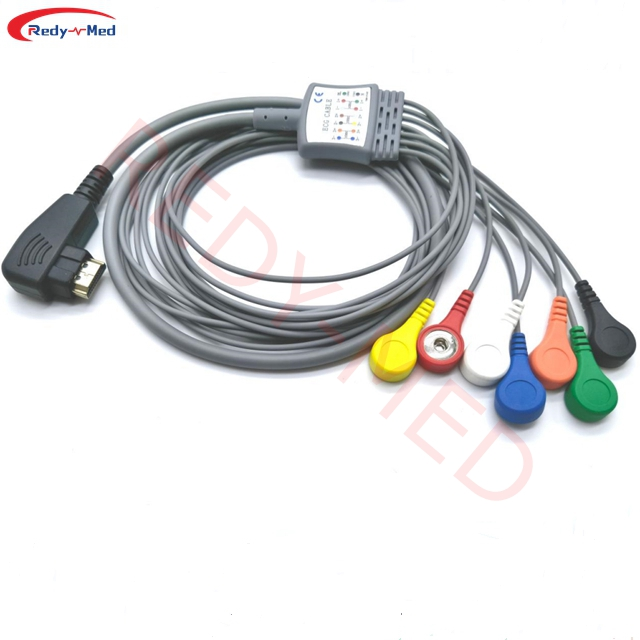
Holter Cable Compatibility Is Not Universal: Understanding the Core Constraints
Why 'Plug-and-Play' Is a Misnomer for Holter Cables
Most people still think holter cables just work when plugged in, but reality tells another story. According to research published last year in electrophysiology journals, nearly four out of five problems with ambulatory monitoring actually come down to bad connections from mismatched cables. The connectors might look exactly alike on different machines, yet inside there's a whole world of difference. Lead impedance alone varies by about 15 percent from one manufacturer to another, creating all sorts of compatibility issues. What makes this so frustrating is that doctors and technicians assume universal compatibility based on appearances alone. We've seen cases where two seemingly identical jacks simply won't pass clean ECG signals despite looking perfectly matched. Calling these cables 'plug-and-play' is really misleading because they need specific electrical matching that most users aren't even aware exists.
Electrical Interface Standards vs. Proprietary Pinouts and Signal Protocols
Electrical standards like IEC 60601 govern basic safety but permit extensive proprietary variations in holter cable signal protocols. Consider these key differences:
| Standardized Element | Proprietary Variations | Clinical Impact |
|---|---|---|
| Connector physical dimensions | Pin depth/alignment differences | Intermittent signal loss during movement |
| Signal voltage range (1–5 mV) | Unique filtering algorithms | Waveform distortion at critical ST segments |
| Impedance thresholds | Brand-specific noise cancellation | False-positive arrhythmia detection |
Manufacturers often design their own special pin configurations to keep devices within their ecosystem. Take for instance a major ECG monitor maker that intentionally uses reversed polarity in its 10 pin connectors, making it hard for other equipment to work together. This kind of fragmentation means doctors have no choice but to buy cables straight from the original equipment manufacturer even though they cost around 40 percent more. Cheaper alternatives from third parties just don't cut it because they can cause problems with signal transmission. When companies prioritize control over standards, it actually affects how accurate heart readings are during critical monitoring situations in hospitals.
Brand-Specific Holter Cable Compatibility: What Works—and What Doesn’t
Mortara, BIOTRONIK, and Nihon Kohden: Verified Holter Cable Pairings
Most Holter recorder makers set their own unique electrical standards that determine which cables work properly. When looking at popular brands like Mortara, BIOTRONIK, and Nihon Kohden, extensive testing shows that only certain cable combinations preserve the quality of signals they need. These combinations require precise arrangements of pins inside the connectors plus specific voltage levels. Get any part of this wrong and the recorded data gets messed up, especially during long monitoring sessions or when patients are moving around a lot. Many third party cables claiming to be 'universal' solutions don't pass these tests because they create problems with electrical resistance in the system. Hospitals that stick to officially approved cable sets typically achieve around 98% accurate readings compared to just 63% accuracy rates seen with non-approved options according to research published in Cardiac Monitoring Journal last year. Hospital procurement staff really need to focus on getting manufacturer approved cables for important cases where doctors are tracking complicated heart rhythm issues. They should also check those detailed compatibility charts provided by each manufacturer to avoid mistakes caused by mismatched connectors or incompatible communication protocols between devices.
Third-Party Holter Cable Validation: Real-World Reliability Data (2023 AHA Survey)
Independent assessments reveal significant reliability gaps in non-OEM solutions. The 2023 American Heart Association (AHA) survey of 214 hospitals found third-party holter cables failed validation at three times the rate of manufacturer-approved options. Key findings include:
- 34% exhibited signal attenuation during extended monitoring
- 28% caused impedance-related artifacts mimicking arrhythmias
- Only 15% passed all electrical safety and signal fidelity benchmarks
Notably, cables failing validation contributed to 12% of unnecessary patient recalls in ambulatory monitoring. These real-world performance metrics underscore why facilities implementing ISO 13485-certified validation protocols reduced diagnostic errors by 65%. Clinical engineers should demand third-party test reports verifying signal stability across target recorder models before deployment.
Clinical Consequences of Mismatched Holter Cables
Signal Artifacts, Impedance Mismatches, and Diagnostic Errors
When holter cables don't match properly, they create signal reflections that mess up ECG quality much like water waves bouncing back from rocks. What happens next? The baseline starts wandering around looking suspiciously like atrial fibrillation, or electromagnetic interference hides those important QRS complexes we need to see. Bad signals often lead to wrong diagnoses of heart rhythm problems because random artifacts look like real issues, while actual problems get lost in all the noise. Hospitals have found that unclear readings from faulty cables actually result in extra tests and treatments for patients who don't need them. Things get really serious when distorted T-waves set off false alarms about heart attacks in automatic monitoring systems. This shows just how important it is to use compatible equipment if we want accurate results in clinical settings.
Case Study: Arrhythmia Misdiagnosis Linked to Non-Compliant Holter Cable Use
There's a well recorded instance where incorrect holter cables led to serious misdiagnoses. A patient was found to have ventricular tachycardia based on their ECG results and given antiarrhythmic drugs. But when they were tested again using properly certified cables, it turned out the original readings showed nothing more than normal baseline signals affected by irregular impedance levels. What happened? The problem came from using cables that weren't certified for this kind of work. These cables had connection issues that kept messing up the waveform patterns while the patient was being monitored outside the hospital setting. Looking at this case alongside others tells us something important about medical equipment compatibility. Using wrong cables doesn't just slow down getting proper diagnosis, it can actually lead to patients receiving treatments they don't need. That's why checking if all monitoring gear works together before starting any tests remains absolutely essential in clinical practice.
How to Verify Holter Cable Compatibility Before Clinical Use
Checking if holter cables work properly needs several steps before putting them on patients. Start by matching up the cable's connectors and impedance specs with what the manufacturer says in their tech docs. Signal transmission problems are still one of the main reasons these devices fail, as shown in various studies about heart monitoring equipment compatibility. Next step is bench testing using conditions that mimic actual body functions. Measure how much noise gets picked up when there's movement involved since sometimes signals degrade in ways that aren't obvious just by looking at them. Also make sure everything meets the IEC 60601-2-47 standard for ambulatory ECG systems. Check things like insulation resistance (should be over 100 megaohms) and whether the defibrillation protection works correctly. Hospitals without their own engineers can turn to outside labs certified under ISO/IEC 17025 standards. These places will run tests and give detailed reports on how well the cables perform under stress. Lastly, create some kind of tracking system so we know when each cable was last validated and what performance limits it has. This helps avoid problems caused by worn out cables after multiple sterilizations.
FAQ
Are all Holter cables compatible with any ECG machine?
No, Holter cables are not universally compatible with all ECG machines due to variations in electrical standards, pin configurations, and proprietary signal protocols from different manufacturers.
What are the consequences of using incompatible Holter cables?
Using mismatched Holter cables can lead to signal artifacts, impedance mismatches, diagnostic errors, and misdiagnosis, potentially resulting in unnecessary treatments.
How can hospitals ensure Holter cable compatibility?
Hospitals can ensure compatibility by using manufacturer-approved cables, performing bench testing, and adhering to standards like IEC 60601 and ISO/IEC 17025 for testing and validation.
Why are OEM Holter cables often preferred over third-party cables?
OEM Holter cables are often preferred because they undergo rigorous testing with their corresponding equipment, ensuring signal fidelity and reducing diagnostic errors compared to third-party alternatives.