 EN
EN

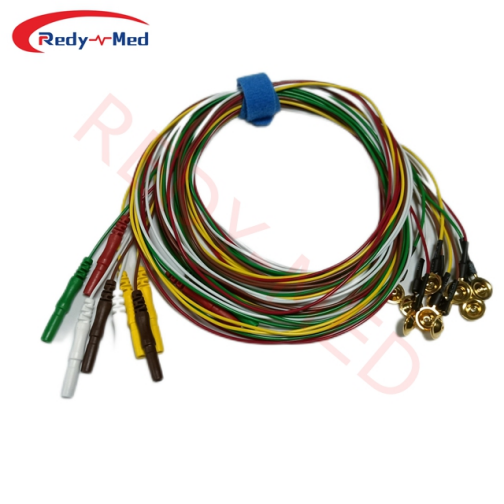
The Inherent Vulnerability of EEG Signals
Microvolt-Amplitude and Broadband Nature Demand Exceptional Signal Integrity
EEG signals work at microvolt levels around 10 to 100 μV, which makes them about 100 times less powerful than ECG readings. Because these brain signals are so sensitive and cover a wide range of frequencies from 0.5 to 100 Hz, they get messed up really easily by electromagnetic interference. Even normal hospital machines generate enough background electricity to drown out actual brain activity unless special cables are used. To keep the quality of diagnoses intact, engineers need to match impedances precisely throughout the whole signal path. If there's more than a 5% mismatch somewhere along the line, the signal gets distorted in ways that matter. Using twisted pair conductors instead of regular parallel wiring cuts down on inductive coupling problems by anywhere between 40 and 60 dB. This setup isn't just nice to have it's absolutely necessary if we want to preserve those fragile brain signals during testing.
Physiological vs. Environmental Noise: Why EEG Cable Design Is the First Line of Defense
Artifacts from physiology like muscle twitches or eye movement come directly from the person being tested, while outside interference mostly sneaks into the system via the EEG cables themselves. The hum of power lines at 50 or 60 hertz creates voltages that are actually 100 to even 1000 times stronger than what our brains produce when there's no shielding involved. When we use conductive polymer shielding instead, it cuts down on this noise by around 80 to 90 percent, which beats out old fashioned passive shielding methods that only manage about 60 to 70% reduction. That makes cable design not just important, but absolutely essential as the very first barrier against all these unwanted signals getting through.
- Triboelectric effects from cable movement generate low-frequency artifacts indistinguishable from authentic brainwaves
- Impedance mismatches at electrode interfaces amplify ambient EMI
- Poorly routed drain wires create ground loops that inject noise
Leading manufacturers address these challenges with triple-layer shielding and silver-coated copper conductors reducing noise ingress by 94% compared to basic cable architectures.
How Motion and Triboelectric Effects Compromise EEG Cable Performance
Cable Flexing Generates Low-Frequency Artifacts Especially Critical in Ambulatory EEG Applications
When patients move around during ambulatory EEG monitoring, their movements naturally cause the cables to bend and flex, which leads to two main types of interference that are actually connected. The first issue comes from conductors getting displaced mechanically, creating what we call motion artifacts. These show up as low frequency distortions between about half a hertz and four hertz, looking a lot like delta waves but hiding real brain activity instead. Tests have shown rigid cables can make these problems worse by roughly 27% when someone walks compared to better designed flexible options. Then there's something called triboelectric effects happening inside the cables themselves. When the materials rub together while bending, they generate static electricity that becomes high impedance noise. This is particularly bad for mobile setups since cables keep getting moved around all day long. Most industry guidelines say triboelectric noise should stay under 50 microvolts to keep signals clean, yet plenty of regular EEG cables go above that mark just from normal daily activities. Put these issues together and studies from 2023 found up to 40% distortion in those important lower frequency ranges. Manufacturers now build cables with special polymers and weave them using microfilaments to tackle both problems at once without sacrificing the flexibility needed for proper home monitoring of conditions like epilepsy or movement disorders.
EMI Threats in Clinical and Real-World Environments
50/60 Hz Power-Line Interference and Harmonics: Quantifying SNR Loss in Unshielded EEG Cable Setups
The tiny signals measured by EEG equipment get really messed up by electromagnetic interference at 50 or 60 hertz frequencies coming from power lines and various medical gadgets around the place. When EEG cables aren't properly shielded, the signal quality drops by about 30 to 50 percent in hospital settings. Things get even worse because these environments tend to amplify background noise through harmonics. What happens is that regular patterns of interference show up in the readings, making it hard to see the small details in brain activity. This becomes especially frustrating when trying to analyze those faint brain waves we're interested in. Hospitals deal with serious EMI problems from things like MRI machines and wireless monitoring devices, but everyday situations present their own challenges too. Think about all those electric car charging stations popping up everywhere and the big industrial generators running nearby. All this means manufacturers need better shielding solutions that work across different environments.
Ground Loops and Impedance Mismatches: Hidden Amplifiers of EMI in EEG Cable Electrode Interfaces
Ground loops happen when several EEG electrodes create different current paths, which turns background electromagnetic interference into distorted signals. When there's an impedance mismatch between the cables and electrodes, things get worse because those connection points start picking up unwanted environmental noise like little antennas. For applications where patients move around a lot, such as during ambulatory monitoring, this combination makes interference problems much bigger sometimes even double in strength. Good cable design needs to stop ground loops by using proper shielding throughout and keeping electrode impedance under about 5 kilohms at every contact point. This helps prevent low frequency noise from getting amplified, which is important since it might hide critical signs like the beginning of seizures or changes in sleep stages that doctors need to see clearly.
Engineering High Anti-Interference EEG Cables
Twisted-Pair Conductors, Conductive Polymer Shields, and Drain Wire Optimization
Robust anti-interference performance in EEG cables relies on three integrated engineering principles:
- Twisted-pair conductors neutralize common-mode noise including dominant 50/60 Hz harmonics by ensuring symmetrical signal and return paths.
- Conductive polymer shields deliver flexible, gap-free coverage that resists motion-induced triboelectric noise while sustaining >90% EMI attenuation across the full 0.5–100 Hz neural bandwidth.
- Optimized drain wire routing establishes low-impedance grounding pathways without forming ground loops preventing noise accumulation at the interface.
When co-engineered, these elements preserve microvolt-level signal integrity across diverse clinical and ambulatory use cases enabling artifact-free neural monitoring without compromising patient mobility or clinician workflow.
FAQ
What causes artifacts in EEG signals?
Artifacts in EEG signals can be caused by physiological factors such as muscle twitches and eye movements, as well as environmental factors, including electromagnetic interference from power lines and poorly designed EEG cables.
Why is shielding important in EEG cables?
Shielding is crucial in EEG cables to reduce noise and interference from power lines and other environmental sources, preserving signal integrity, and ensuring accurate brain activity readings.
How do triboelectric effects affect EEG cables during movement?
Triboelectric effects occur when materials in a cable rub together, creating static electricity. This can become a high impedance noise, significantly affecting signal clarity, especially in mobile EEG applications where cables are constantly in motion.
What improvements are being made in EEG cable design?
Recent improvements in EEG cable design focus on using twisted-pair conductors, conductive polymer shields, and optimized drain wire routing to minimize noise, prevent ground loops, and maintain signal integrity in various environments.