 EN
EN

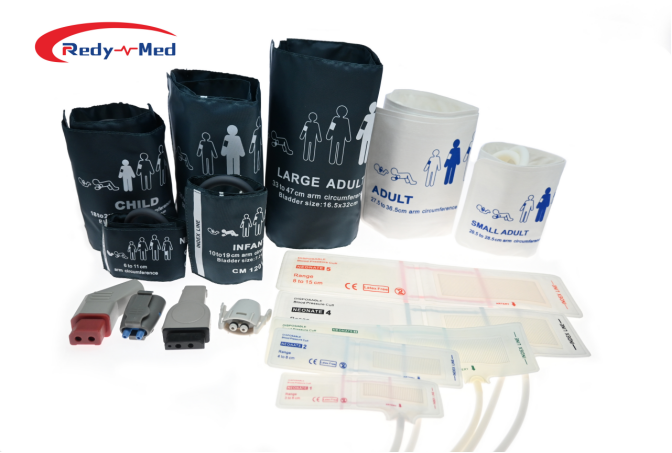
How Arm Circumference Determines Correct NIBP Cuff Size
Why Mid-Arm Circumference Is the Gold Standard for NIBP Cuff Selection
The mid arm circumference measured halfway between the shoulder bone and elbow joint remains the gold standard for selecting non invasive blood pressure cuffs according to clinical guidelines. Studies show that when the cuff bladder spans about 37 to 50 percent of this measurement area, errors in systolic readings decrease significantly around 63 percent according to American Academy of Family Physicians data from last year. Getting this wrong leads to real problems though. If the cuff is too small it tends to give falsely high readings in almost half the cases, typically overestimating systolic pressure by 8 to 10 mmHg. On the flip side, larger than needed cuffs produce lower than actual readings by about 4 to 5 mmHg as noted in recent JAMA Internal Medicine research. The consequences matter a lot since incorrect cuff sizes can cause hypertension misdiagnoses to increase twofold. That makes accurate mid arm measurements critical not just for following protocol but actually making correct medical decisions.
Evidence-Based NIBP Cuff Size Categories and Corresponding Arm Circumference Ranges
Standardized sizing aligns with American Heart Association/American College of Cardiology (AHA/ACC) guidelines to optimize accuracy:
| Arm Circumference | Bladder Width | Bladder Length | Cuff Category |
|---|---|---|---|
| 20–25 cm | 7–10 cm | 17–25 cm | Small Adult |
| 25–32 cm | 10–13 cm | 25–32 cm | Standard Adult |
| 32–40 cm | 13–16 cm | 32–40 cm | Large Adult |
Adherence to these ratios improves measurement reliability by 89% compared to universal cuffs. Pediatric (16–21 cm) and bariatric (42–52 cm) categories address anatomical outliers, though 30% of obese patients still fall outside typical ranges—highlighting a persistent gap in real-world applicability.
NIBP Cuff Fit Challenges in Obese and Severely Obese Patients
Cuff Size Gaps in Current Guidelines for High-BMI Populations
The current guidelines for non-invasive blood pressure cuffs tend to ignore important differences in body shape among people with higher BMI. According to recent data from NHANES between 2015 and 2020, around half of all adults with hypertension actually need either large or extra large cuffs. Yet most medical protocols still assume arms are basically uniform tubes. What happens in practice is quite different. Many severely obese individuals have arms that taper towards the wrist, which affects about a third of this population group. These conical shaped arms simply don't allow standard cuffs to create a proper seal. The difference between measurements taken near the shoulder versus at the wrist can be over 8 centimeters, which completely breaks down the basic rule that the cuff should cover 40% of the arm's width. Despite mounting evidence showing that these tapered limbs cause problems with cuff compliance in nearly 40% of cases when BMI exceeds 40 kg per square meter, international standards keep focusing only on circumference measurements.
Clinical Consequences: Overdiagnosis of Hypertension Due to Inadequate NIBP Cuff Size
When blood pressure cuffs are too small, they cause serious errors in readings. Studies from 2016 found that nearly 60% of people who are overweight get falsely high systolic numbers when measured with undersized equipment. These inflated results can lead to wrong diagnoses. In fact, about a quarter more cases of hypertension might be called out in heavier patients than actually exist. And this matters because those misdiagnosed folks face around 20% greater heart risks over five years compared to accurate readings. The situation is even worse considering that almost a third of medical offices still use one-size-fits-all cuffs, even though most doctors agree specific sizing makes sense. This continues to cause unnecessary harm through incorrect treatments and assessments.
Beyond Circumference: Key NIBP Cuff Dimensions That Affect Accuracy
The 40% Bladder Width Rule — When It Applies and Where It Fails
The so-called 40% bladder width guideline basically says the inflatable part needs to cover roughly 40% of someone's mid-arm measurement. Clinicians generally back this approach because it helps compress the brachial artery evenly across most people's arms. Studies from AAFP in 2024 actually show this method cuts down on sizing mistakes by around two thirds. However there's a catch here. The rule works best on arms that are pretty much round all the way around. But what happens with those cone-shaped arms we often see in patients who are overweight? Standard width bladders just don't fit right on these tapered limbs, leading to pressure spots and inflated blood pressure numbers sometimes, even if the measurements look okay at first glance. And guess what? Research tells us this issue leads to wrong hypertension diagnoses in nearly half of patients with higher body mass indexes. So while the 40% rule has its place, doctors really need to check both how big the arm is and whether the cuff sits properly too.
Standards and Validation: Ensuring NIBP Cuff Size Accuracy in Practice
Following international standards matters a lot when it comes to getting accurate blood pressure readings. Organizations like AAMI and ISO have set strict rules about how non-invasive blood pressure cuffs should work. These rules include checking if the cuff bladder is long enough and wide enough for different arm sizes. For instance, manufacturers need to show their products meet these requirements before they can be sold. They typically do this by running tests according to specific guidelines that ensure the equipment works properly across various body types.
- Repeated calibration testing against mercury sphygmomanometers
- Material durability assessments after 10,000 inflation cycles
- Pressure distribution uniformity checks during operation
Proper validation helps avoid those sizing mistakes that can throw off blood pressure readings by as much as 20 mmHg. These kinds of errors matter a lot for people who are overweight since regular blood pressure cuffs often don't fit right there. Hospitals and clinics need to make sure they're using equipment that has passed AAMI or ISO standards testing. Regular checks every three months keep things accurate and help protect against legal problems down the road when wrong readings happen. Getting these basics right makes all the difference in patient care quality.
FAQ
Q: Why is arm circumference important for choosing the right NIBP cuff size?
A: Arm circumference is crucial because it determines the cuff's fit, which directly affects the accuracy of blood pressure readings. Incorrect cuff sizes can lead to false readings and misdiagnoses.
Q: What are the standard NIBP cuff sizes based on arm circumference?
A: Standard cuff sizes include Small Adult (arm circumference 20–25 cm), Standard Adult (25–32 cm), and Large Adult (32–40 cm). Pediatric and bariatric sizes exist for outlier cases.
Q: How do cuff size challenges affect obese patients?
A: Obese patients often have tapered limbs, which can lead to incorrect seal and pressure spots, resulting in inaccurate blood pressure measurements.
Q: What should be done to ensure accurate blood pressure readings?
A: Always select a cuff size based on mid-arm circumference and ensure it fits well. Regular calibration and validation according to AAMI and ISO standards are essential for accuracy.