 EN
EN

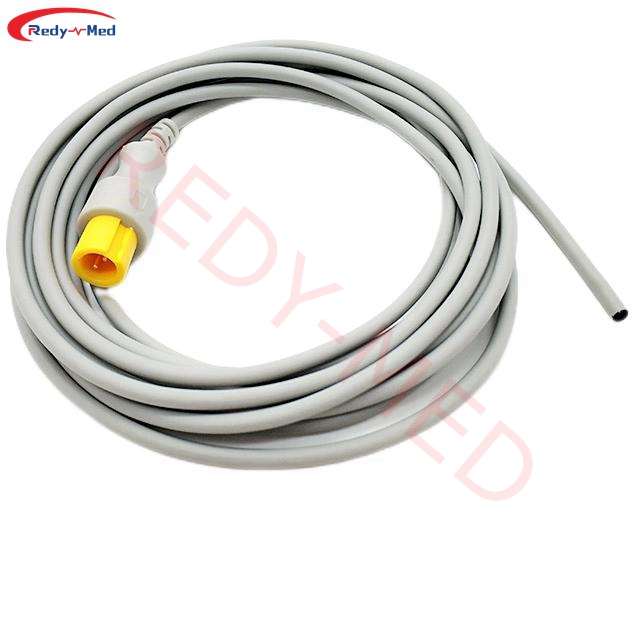
Why Accuracy and Clinical Validation Matter in Cavity Temperature Probes
Rectal Thermometry as the Gold Standard for Core Temperature Measurement
Rectal thermometry remains the clinical gold standard for core body temperature measurement due to its proximity to internal organs and minimal environmental interference. Studies show rectal readings deviate by only ±0.1°C from true core temperature (Journal of Clinical Monitoring 2021), compared to ±0.3°C for tympanic methods. This precision proves critical in surgical settings where hyperthermia detection directly influences anesthesia protocols. Medical-grade temperature probes designed for rectal use feature flexible, biocompatible silicone shafts and rounded tips to prevent mucosal damage while maintaining positional stability during prolonged monitoring.
Accuracy Comparison: Rectal vs. Oral vs. Axillary Probe Placement
Clinical accuracy varies significantly across measurement sites, necessitating site-specific probe selection:
| Placement | Mean Deviation | Clinical Use Case | Limitations |
|---|---|---|---|
| Rectal | ±0.1°C | Critical care, surgery | Patient discomfort |
| Oral | ±0.3°C | Routine assessments | Affected by food/drink |
| Axillary | ±0.5°C | Pediatric screening | Slow stabilization (5+ minutes) |
Oral probes require rapid-response sensors (<15 seconds) to capture fleeting sublingual heat signatures, while axillary variants need thermal buffers to compensate for air gaps. Crucially, rectal measurements correlate 98% with pulmonary artery readings (Critical Care Medicine 2022), making them indispensable for sepsis detection and targeted temperature management.
Regulatory and Clinical Validation Requirements for Medical Temperature Probes
Medical temperature probes must undergo rigorous validation per ISO 80601-2-56 standards and FDA 510(k) clearance, requiring:
- Clinical accuracy testing across 100+ patient cohorts
- Material biocompatibility certification (USP Class VI)
- Electromagnetic compatibility validation
Manufacturers must document ±0.1°C precision within the 35–42°C range through independent lab trials. Post-market surveillance mandates ongoing accuracy audits, with non-compliant devices incurring an average $500k recall cost (FDA Enforcement Report 2023). These protocols ensure reliability in detecting critical febrile states—such as malignant hyperthermia—where a 0.5°C deviation can alter treatment pathways.
Infection Control and Safety Protocols for Reusable and Disposable Temperature Probes
Hygiene Best Practices for Multi-Patient Temperature Probe Use
Implementing stringent hygiene protocols is non-negotiable for reusable temperature probes. Studies in the American Journal of Infection Control (2018) demonstrated that reusable probes transmit pathogens like Candida auris, with the New England Journal of Medicine (2018) confirming outbreaks linked to contaminated devices. Clinicians must:
- Sterilize probes with high-level disinfectants (e.g., hydrogen peroxide) between patients
- Document disinfection cycles using traceability systems
- Inspect probes for material degradation monthly
The Society for Healthcare Epidemiology (SHEA) 2017 guidelines emphasize that disposable probes reduce Clostridioides difficile infections (CDI) by 34% in high-risk units.
Disposable vs. Reusable Probe Tips: Balancing Sterility, Cost, and Workflow Efficiency
Selecting probe types requires evaluating clinical priorities:
| Factor | Disposable Probes | Reusable Probes |
|---|---|---|
| Infection Risk | Near-zero cross-contamination | Requires perfect compliance with sterilization protocols |
| Cost per Use | Higher ($1.20–$2.50) | Lower ($0.30 after 50 uses) |
| Workflow Impact | No cleaning; 78% faster patient turnover | 9-minute sterilization cycle per probe |
| Clinical Best Fit | ICUs, ORs, immunocompromised units | General wards with controlled environments |
Hybrid deployment—disposables in critical care and reusables elsewhere—optimizes safety and resource allocation. Leading hospitals report 41% cost savings without compromising sterility using this model.
Design and Functional Criteria for Body Cavity–Optimized Temperature Probes
Anatomic Fit, Material Biocompatibility, and Insertion-Site Specific Design (Rectal, Oral, Vaginal)
Body cavity temperature probes require precise anatomic shaping to ensure patient comfort and measurement accuracy. Rectal probes need tapered, flexible designs with secure grips to prevent slippage during movement. Oral probes require slim profiles and rounded tips to avoid gag reflexes while maintaining sublingual contact. Vaginal probes demand curved ergonomics matching natural anatomy. Material biocompatibility is non-negotiable—medical-grade silicone or polyurethane prevents mucosal irritation and eliminates latex allergy risks. Insertion-site optimization also dictates thermal responsiveness: rectal probes require faster heat transfer than oral variants due to dense tissue barriers. Probe surfaces need smooth, non-porous finishes to simplify sterilization protocols between uses.
Practical Selection Framework: Matching Temperature Probe Features to Clinical Needs
Selecting optimal medical temperature probes requires matching technical specifications to departmental workflows and patient populations. Start by categorizing clinical scenarios into three tiers:
- High-acuity settings (ER, ICU, OR) demand disposable probes with rapid response times (<5 seconds) and ±0.1°C accuracy to prevent cross-contamination during frequent patient turnover
- General care units benefit from reusable probe systems with durable, autoclavable tips where controlled workflows allow thorough sterilization between uses
- Pediatric/special needs populations prioritize flexible-tip designs with minimal insertion depth and maximum biocompatibility
Balance cost against infection risks using this evidence-based approach: disposable probes reduce HAIs by 63% in immunocompromised cohorts but increase annual supply costs by $18k per unit according to clinical procurement data. Meanwhile, reusable systems require validation of sterilization cycles every 90 days per Joint Commission standards.
Finalize decisions by auditing four operational factors:
- Compatibility with existing monitoring equipment
- Staff training requirements for new probe protocols
- Calibration frequency and documentation workflows
- Patient volume-to-probe inventory ratios
This framework prevents clinical-environment mismatch—like using slow-response probes in trauma bays or rigid tips in neonatal care—ensuring accurate readings while optimizing resource allocation.
FAQ
What is the gold standard for core temperature measurement?
Rectal thermometry is considered the gold standard due to its proximity to internal organs and minimal environmental interference.
Why are rectal measurements preferred in surgical settings?
Rectal measurements are preferred because they offer precision critical for surgical settings, with deviations by only ±0.1°C, directly influencing anesthesia protocols.
What are the key regulatory requirements for medical temperature probes?
Probes must adhere to ISO 80601-2-56 standards and require FDA 510(k) clearance, including clinical accuracy testing, biocompatibility certification, and electromagnetic compatibility validation.
How do disposable probes prevent infections?
Disposable probes are designed to minimize cross-contamination, reducing infection risks by eliminating the need for sterilization between patients.
What should be considered when selecting temperature probes for clinical use?
Consider regulatory compliance, infection control, accuracy, and compatibility with existing equipment. Tailor the choice based on specific clinical scenarios and patient needs.
Table of Contents
- Why Accuracy and Clinical Validation Matter in Cavity Temperature Probes
- Infection Control and Safety Protocols for Reusable and Disposable Temperature Probes
- Design and Functional Criteria for Body Cavity–Optimized Temperature Probes
- Practical Selection Framework: Matching Temperature Probe Features to Clinical Needs
-
FAQ
- What is the gold standard for core temperature measurement?
- Why are rectal measurements preferred in surgical settings?
- What are the key regulatory requirements for medical temperature probes?
- How do disposable probes prevent infections?
- What should be considered when selecting temperature probes for clinical use?