 EN
EN

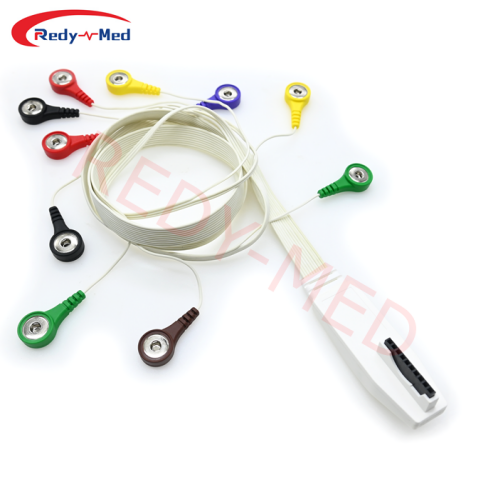
How Holter Cables Support Continuous Ambulatory ECG Recording
Signal Integrity and Noise Reduction in Dynamic Ambulatory Environments
The quality of Holter cable design makes all the difference for accurate ECG readings when someone is moving around throughout their day. These cables use multiple layers of shielding to keep out electromagnetic noise from everyday devices we carry with us, like our phones and those Wi-Fi routers everywhere now. When people walk or shift positions, the twisted pair conductor setup helps eliminate unwanted signal distortions caused by movement. Getting the impedance right between 300 and 500 ohms is actually pretty critical too because otherwise the signals start bouncing back and forth, which messes with how doctors see those important P-waves on the screen over time. Poor shielding turns out to be a major problem in diagnostics according to recent research published last year in the Journal of Cardiology Practice, where they found nearly half of all issues with ambulatory ECGs come down to bad cable shielding alone. And what happens? Sometimes it looks like there's an arrhythmia when there isn't one, or worse still, hides real changes in the heart's electrical activity. Good quality cables send much cleaner signals to the recording device, cutting down on false alarms for conditions like atrial fibrillation by about a third compared with cheaper cables that don't have proper shielding.
Cable Flexibility, Durability, and Patient Comfort for 24–72-Hour Wear
The thermoplastic elastomers used in Holter cable jackets offer really good resistance to kinking plus they bend nicely against the skin, which lets people move around naturally whether they're sleeping, working out, or going about their day. The cables also have built-in strain relief at those points where wires tend to snap, something pretty important since almost seven out of ten early failures happen because of damaged cables according to Clinical Engineering Insights from last year. We've seen improvements too with breathable materials that don't contain latex, cutting down on skin irritation when worn for long periods. Plus, the lighter weight coils reduce pulling on the electrodes themselves. All these design elements actually make a difference in how reliable the monitoring is clinically speaking. Real world data shows patients experience about a quarter fewer accidental electrode losses when using properly designed cables, meaning doctors get complete readings throughout the entire 24 to 72 hour testing period without interruptions.
Holter Cable Design Essentials for Clinical-Grade ECG Data
Conductor Materials, Shielding, and Impedance Matching for Stable Signal Transmission
Using oxygen free copper for conductors helps reduce both electrical resistance and thermal noise problems. Clinical settings benefit from multi layer shielding made with foil and braid which can block electromagnetic interference around 90 percent according to research published in Cardiovascular Engineering Journal back in 2022. When it comes to wiring arrangements, twisted pairs actually perform better than simple parallel setups cutting down on crosstalk issues by roughly 60%. This makes all the difference when trying to capture accurate waveforms during those important dynamic recordings. Getting impedance right is another key factor because mismatched signals tend to distort over time. These distortions make it hard for clinicians to properly interpret small but significant details such as when P waves start or how symmetrical T waves appear on ECG readings.
Connector Types and Interoperability with Holter Recorders
The standard connectors used in medical devices include snap, pin, and waterproof Mini-DIN interfaces, all of which need to keep contact resistance under 0.5 ohms so signals don't drop out randomly. Snap connectors make it easy to attach colored leads to disposable electrodes quickly. Pin systems work great when connecting to those multi-parameter monitors we see everywhere these days. And those shielded locking Mini-DIN connectors? They stay put even during long sleep studies where movement is inevitable. Most manufacturers follow the IEC 60601-2-47 standard, which means their equipment works with about 95% of Holter recorders on the market. The strain relief sleeves built into many connectors help reduce wear and tear at connection points, making them more reliable day after day in hectic clinical environments where every second counts.
Optimizing Holter Cable Performance in Real-World Clinical Workflows
Lead Configuration Best Practices: 3-Channel vs. 12-Lead Holter Cable Setups
When deciding between 3-channel and 12-lead Holter cable setups, healthcare providers need to match what they want to diagnose with how practical the setup will be for both staff and patients. The 12-lead systems give much better spatial information which is really important when looking at signs of heart problems or mapping out irregular heartbeats. But these come with downsides too. They take about half again as long to set up properly and wires tend to get tangled more easily when patients move around. On the other hand, most doctors find that 3-channel setups work fine for the majority of standard arrhythmia checks. Studies show there's roughly 60 percent less interference from movement during normal activities or while sleeping compared to the 12-lead option. So generally speaking, go with 12 leads if someone needs detailed ST segment analysis before surgery or similar procedures. For regular rhythm monitoring where getting good continuous signals matters most, the simpler 3 channel approach usually works just as well without all the hassle.
Electrode-Cable Interface Management to Minimize Artifact and Ensure Recording Continuity
Sustained electrode-skin contact is foundational to artifact-free ambulatory ECGs. Secure snap connectors with integrated strain relief reduce lead detachment by up to 40% during physical activity. Best practices include:
- Redundant contact systems, such as dual-spring electrode connectors, which maintain conduction despite minor skin shifts
- Strategic cable routing, taping leads parallel to natural skin folds to minimize tension during movement
- Conductive hydrogel verification, replacing dried electrodes at 48-hour intervals to sustain skin-electrode impedance below 5 kΩ
Proper strain distribution also mitigates sweat-induced impedance spikes by 30%, preserving baseline stability. In ambulatory use, cohesive encapsulation techniques at the electrode-cable junction prevent fluid ingress while accommodating natural epidermal movement—ensuring both signal integrity and patient comfort throughout the recording period.
Frequently Asked Questions (FAQ)
What is the importance of shielding in Holter cables?
Proper shielding in Holter cables prevents electromagnetic interference from external devices, ensuring clear and accurate ECG recordings by eliminating unwanted signal distortions.
Why are Holter cables made with thermoplastic elastomers?
Thermoplastic elastomers provide durability and flexibility, reducing kinking and skin irritation, which enhances patient comfort during prolonged wear.
How do Holter cables maintain stable signal transmission?
Holter cables use oxygen-free copper conductors, multi-layer shielding, and appropriate impedance matching to minimize electrical resistance and thermal noise, supporting stable signal transmission.