 EN
EN

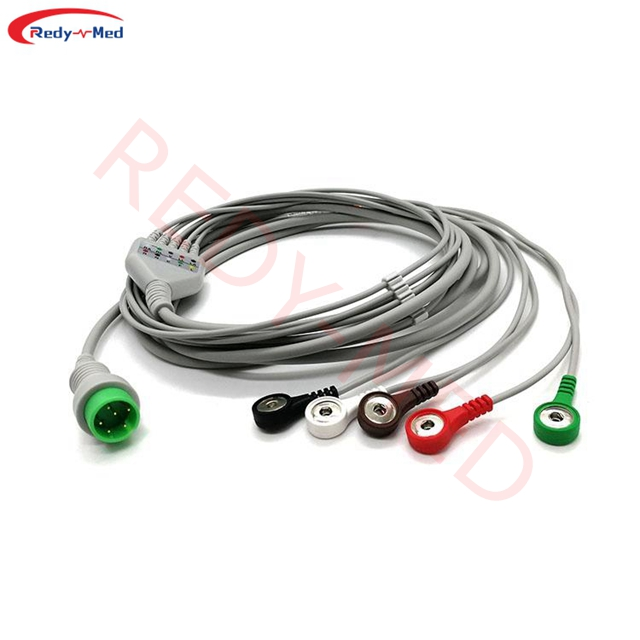
Why Signal Stability Matters: The Microvolt Challenge in ECG Cable Performance
The Clinical Imperative: How ST-Segment Fidelity and Baseline Stability Impact Diagnosis
When it comes to monitoring heart function critically, getting clear ST-segment readings matters a lot for spotting problems like myocardial ischemia. Even small amounts of noise, as little as 100 microvolts according to research from the Journal of Electrocardiology in 2023, can hide important changes that doctors need to see. The baseline tends to wobble around because electrodes sometimes don't stick properly or cables move when patients shift positions. This kind of interference messes with how T-waves look on the screen and might hide dangerous rhythm problems. Looking at actual clinical data shows that all this extra noise from cables raises diagnostic doubts by about 12% during stress tests. So clean signals aren't just nice to have they actually make a big difference in what treatments get prescribed.
Physics of Weak-Signal Transmission: Capacitance, Impedance Mismatch, and Attenuation in ECG Cable Design
ECG bio-signals range from 0.5–5 mV—microvolt-scale voltages demanding precision engineering:
- Capacitance: Shielding layers introduce parasitic capacitance; excessive values attenuate high-frequency components like R-wave peaks. Optimal designs maintain distributed capacitance below 180 pF/m.
- Impedance Mismatch: When conductor-skin impedance exceeds 3 kΩ, voltage divider effects amplify 50/60 Hz interference by up to 70% (Biomedical Instrumentation & Technology 2022).
- Attenuation: Cables longer than 2 meters—without low-loss dielectrics—can dampen signals by 15–20%. Conductive polymers with dissipation factors under 0.01 mitigate this loss.
Twisted-pair geometries reduce EMI-induced crosstalk by 60% versus parallel layouts, preserving integrity across the full diagnostic bandwidth (0.05–150 Hz).
EMI Shielding Strategies That Maximize ECG Cable Signal Integrity
Multi-layer shielding evolution: Braided + foil architectures for >95% coverage and ¥42 dB 50/60 Hz noise rejection
Today's ECG cables combine braided copper mesh with conductive foil laminates to reach over 95% shielding coverage, which is way better than what single layer options can offer. These advanced designs typically provide at least 42 dB of noise reduction for those pesky 50/60 Hz power line interferences we see so often in hospitals and clinics. The braiding gives the cables their strength and creates good grounding connections, whereas the foil works great against high frequency signals coming from MRI machines and other wireless equipment around the facility. When everything is properly terminated all the way around and grounded correctly, these systems maintain stable baselines under 5 microvolts, making it possible to spot even small changes in ST segments during critical monitoring situations.
| Shielding Type | Coverage | Noise Rejection | Flex Durability | Best Use Case |
|---|---|---|---|---|
| Foil Only | 100% | High-frequency | Low | Static monitoring |
| Braided Only | 70–85% | Low-frequency | High | General ward use |
| Braided + Foil | >95% | Full-spectrum | Moderate | Critical care/ER settings |
Validated in clinical electrophysiology studies, this architecture reduces motion artifacts by 41% (Clinical Electrophysiology Review 2023), preventing misinterpretations that previously triggered unnecessary thrombolytic therapy in 12% of emergency cases.
Material Science Behind Reliable ECG Cable Performance
TPU vs. silicone insulation: Balancing flex life, dielectric loss, and long-term signal accuracy in ambulatory ECG cables
TPU can handle around 50,000 flex cycles which is roughly twice what silicone typically lasts. That makes it a good choice for wearable devices and other monitoring equipment where the cables are constantly moving back and forth. On the flip side, silicone has much lower dielectric loss, staying below 0.02 percent from frequencies of 0.05 to 150 Hz. This property helps maintain those tiny voltage signals that doctors need to spot irregular heart rhythms as they happen. The crystal structure of TPU does help prevent cracks from forming, but there's a catch. Its higher capacitance actually causes a small increase in signal loss over time. Because of this issue, many hospitals and clinics now prefer TPU core cables that come with extra shielding added. This combination seems to work best when balancing durability against signal quality requirements.
Oxygen-barrier extrusions: Necessity or over-engineering for ICU-grade ECG cable longevity?
The multi layer oxygen barrier jackets can actually double or even triple the lifespan of equipment in coronary intensive care units. This happens because they stop copper from oxidizing, something that would normally increase conductor impedance by around 15 to 30 percent within just 18 months according to biomedical material research. Accelerated aging tests have shown that regular cables used for eight hours or less each day don't really suffer much conductivity loss, so these special barriers probably aren't worth it unless we're talking about those intense heat situations where cables work nonstop. Coronary ICUs are exactly such places since constant monitoring keeps conductor temperatures well over 40 degrees Celsius. That's why oxygen blocking additives make such a difference there, stopping the kind of thermal drift that messes up important ST segment readings. Most top material scientists today suggest going modular instead of coating the whole cable. Just apply those protective layers where the heat is worst at those electrode connections points.
Selecting the Right ECG Cable: A Clinician’s Practical Decision Framework
Clinicians face consequential tradeoffs when selecting ECG cables—suboptimal choices risk both diagnostic accuracy and workflow efficiency. Key evidence-based considerations include:
- Material Durability: Thermoplastic polyurethane (TPU) delivers 3× greater abrasion resistance than PVC and maintains signal integrity during extended ambulatory use.
- Connector Compatibility: Mismatched connectors cause 23% of signal dropout incidents; always verify locking mechanisms align with your ECG machine’s lead socket specifications.
- Cable Length: In bedside telemetry, 6-foot cables reduce motion artifacts by 18% compared to 10-foot alternatives (cardiac telemetry studies).
- Cleaning Protocol: Cables rated IPX7 for immersion cleaning demonstrate 40% longer service life in high-turnover ICU environments.
- Lead Configuration: 12-lead systems require individually shielded wires to contain crosstalk below 5 µV—the recognized threshold for preserving ST-segment interpretability.
Prioritize cables independently certified to ANSI/AAMI EC53, verifying noise rejection below 10 µV in standardized 60 Hz electromagnetic environments.
FAQ: ECG Cable Performance and Signal Stability
Why is signal stability important in ECG cables?
Signal stability is crucial in ECG cables because it ensures accurate diagnostic readings by minimizing noise and interference, which can obscure important heart activity like ST-segment variations indicative of issues such as myocardial ischemia.
What factors influence the performance of ECG cables?
Factors influencing ECG cable performance include capacitance, impedance mismatch, and attenuation, which affect bio-signal transmission. Shielding, material durability, and connector compatibility also play significant roles.
What are the advantages of using braided and foil shielding in ECG cables?
Braided and foil shielding together offer over 95% coverage and provide excellent noise rejection, making them ideal for handling both low-frequency and high-frequency interferences in critical care environments.
How do materials like TPU and silicone affect ECG cable performance?
TPU provides higher abrasion resistance and longer flex life, while silicone offers lower dielectric loss, improving the long-term signal accuracy. The choice depends on balancing these attributes against durability and cost.
Are oxygen-barrier extrusions necessary for all ECG cables?
Oxygen-barrier extrusions are primarily necessary in environments with constant high heat, such as coronary ICUs, to prevent copper oxidation and maintain cable longevity. They might not be needed for regular monitoring scenarios.
Table of Contents
- Why Signal Stability Matters: The Microvolt Challenge in ECG Cable Performance
- EMI Shielding Strategies That Maximize ECG Cable Signal Integrity
- Material Science Behind Reliable ECG Cable Performance
- Selecting the Right ECG Cable: A Clinician’s Practical Decision Framework
-
FAQ: ECG Cable Performance and Signal Stability
- Why is signal stability important in ECG cables?
- What factors influence the performance of ECG cables?
- What are the advantages of using braided and foil shielding in ECG cables?
- How do materials like TPU and silicone affect ECG cable performance?
- Are oxygen-barrier extrusions necessary for all ECG cables?