 EN

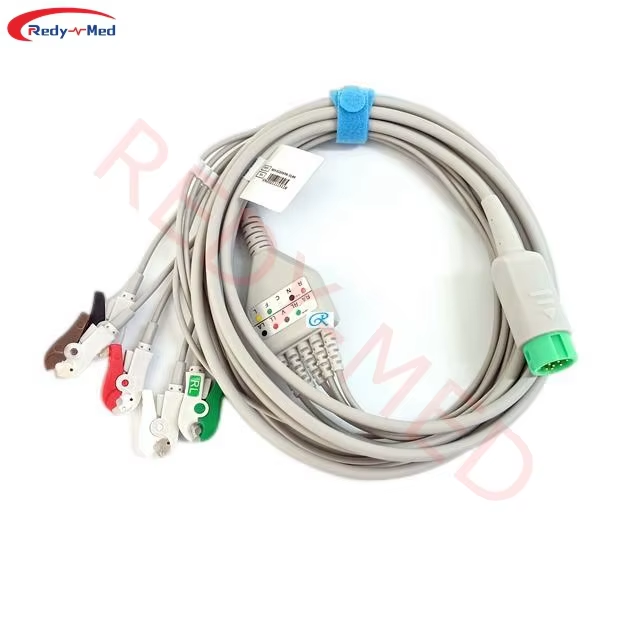
Signal Integrity and Electrical Precision in Critical Patient Monitoring
When clinicians observe vital signs on a bedside monitor, every microvolt counts. A high quality medical cable acts as the central neurological pathway between sensitive biological sensors and diagnostic processing units. Electrocardiogram waveforms, pulse oximetry readings, and invasive blood pressure tracks rely entirely on unbroken transmission fidelity. If a medical cable suffers from electromagnetic interference or triboelectric noise caused by mechanical movement, signal artifacts can distort diagnostic telemetry. Engineers must implement precision shielding, including spiral tinned copper wire or conductive foil, to shield delicate signals from high frequency surgical equipment noise. Choosing a superior medical cable guarantees that low amplitude signals like fetal monitoring pulses arrive without attenuation. Compliance with ANSI AAMI EC53 standards ensures low capacitance levels across every conductive strand. A well engineered medical cable maintains stable signal propagation even during patient transport when cables bend and twist continuously. Reliable signal acquisition prevents false alarms in intensive care units, which directly improves clinical efficiency. Hospital staff depend on a durable medical cable to maintain accurate data delivery during emergency resuscitation procedures. Advanced shielding technology inside a specialized medical cable effectively filters unwanted ambient noise while keeping signal distortion under one percent. Maintaining electrical continuity across every channel ensures that multi parameter patient monitors function flawlessly in critical care environments.
Engineering Materials and Biocompatibility Standards for Healthcare Settings
Selecting appropriate jacket materials for a medical cable requires balancing mechanical flexibility with strict biological safety rules. Clinical environments expose every medical cable to aggressive chemical disinfectants, including quaternary ammonium compounds, hydrogen peroxide wipes, and isopropyl alcohol solutions. Standard industrial insulation rapidly degrades, cracks, or hardens when subjected to daily hospital cleaning protocols. A biocompatible medical cable uses medical grade thermoplastic polyurethane or liquid silicone rubber to preserve structural integrity over extended service life. Compliance with ISO 10993 cytotoxicity and skin irritation standards ensures that a medical cable remains safe for direct or indirect contact with patient skin. Furthermore, thermoplastic elastomers offer low surface friction to reduce tangling in busy operating suites. Cable construction must resist moisture ingress, autoclave steam sterilization cycles, and ethylene oxide gas treatments without jacket embrittlement. A flame retardant medical cable conforming to UL 94 V 0 safety ratings provides additional fire protection in oxygen enriched clinical spaces. Thermal stability enables a medical cable to endure extreme temperature shifts during transport and storage. Material purity prevents plasticizer leaching, protecting both sensitive electronic components and vulnerable patient populations. Superior jacket integrity prevents liquid ingress, guarding internal conductors against short circuits and chemical corrosion.
Durability Challenges and Flex Life Performance in High Motion Care Environments
Frequent bending, pulling, and equipment movement place intense mechanical stress on a medical cable throughout daily hospital operations. Clinical staff frequently maneuver patient monitors across emergency rooms, subjecting connected assemblies to severe strain near terminal connectors. A resilient medical cable incorporates aramid fiber core strength members, such as Kevlar strands, to absorb tensile forces and prevent internal conductor breakage. Flex life testing protocols evaluate how well a medical cable withstands over fifty thousand reverse bending cycles under specified mechanical loads. Custom strain relief boots placed at connector junctions dissipate bending stresses away from delicate solder joints. Without proper mechanical reinforcement, a substandard medical cable develops intermittent electrical continuity failures that cause sudden monitor signal loss. Molded flex relief design extends operational longevity while maintaining ergonomic handling comfort for healthcare professionals. Furthermore, high flex stranded conductors made from silver plated copper alloy enhance fatigue resistance during constant motion. A ruggedized medical cable mitigates mechanical wear caused by heavy hospital bed wheels rolling over exposed cords. Rigorous torsion testing confirms that a flexible medical cable resists internal wire twisting that leads to insulation breakdown and short circuits. High tensile strain relief systems protect critical pin connections from accidental disconnection during emergency patient movements.
Real World Field Case Analysis on Hospital Equipment Reliability
A major regional hospital system previously experienced recurrent diagnostic telemetry glitches within its cardiac intensive care unit. Frequent false ventricular arrhythmia alarms led to severe alarm fatigue among nursing staff and unnecessary patient interventions. Field engineering evaluations revealed that the existing medical cable assemblies lacked sufficient triboelectric noise suppression during patient repositioning. Microphonic noise generated by friction between internal conductors and dielectric insulation was creating voltage spikes mistaken for cardiac anomalies. The hospital replacement program introduced an upgraded medical cable incorporating a conductive low noise carbon layer around the core conductors. This specialized medical cable design reduced movement induced electrical noise by over eighty five percent. Clinical monitoring errors dropped immediately, reducing false alarm triggers and streamlining nursing workflows across fifty critical care beds. Long term tracking demonstrated that the enhanced medical cable extended service life from six months to over two years under continuous clinical usage. Maintenance budgets saw a forty percent reduction in replacement costs, proving that investing in an engineered medical cable delivers immediate operational and financial returns. This field implementation highlights how micro level cable engineering directly impacts macro level clinical safety. Implementing reliable interconnections eliminated unnecessary alarm resets, allowing clinical teams to focus entirely on direct patient care.
Strategic Commercial Value and Custom Supply Chain Excellence
For medical device manufacturers, selecting a medical cable involves far more than sourcing a simple component. Custom engineering capabilities allow original equipment manufacturers to integrate specialized sensor leads, multi parameter trunk systems, and proprietary connector interfaces into a unified medical cable solution. Streamlined manufacturing processes certified under ISO 13485 ensure strict quality traceability across every production batch. Global supply chain partnerships enable reliable component availability and rapid prototyping for new patient monitor developments. Sourcing a fully certified medical cable simplifies regulatory approval pathways, including FDA 510 k clearances and European CE mark certifications, by providing pre tested biological and electrical compliance data. Optimized total cost of ownership is achieved when a durable medical cable minimizes warranty claims, field failures, and clinical downtime. Advanced OEM manufacturing partners like Redy-Med deliver end to end production capabilities, combining high precision cable extrusion, custom overmolding, and full automated testing to meet demanding global healthcare requirements. Tailored supply chain management ensures scalable production capacity while upholding exact technical specifications for next generation patient monitoring technologies. Strategic collaboration with experienced manufacturing partners guarantees consistent product quality and long term operational support for global medical equipment brands.
Table of Contents
- Signal Integrity and Electrical Precision in Critical Patient Monitoring
- Engineering Materials and Biocompatibility Standards for Healthcare Settings
- Durability Challenges and Flex Life Performance in High Motion Care Environments
- Real World Field Case Analysis on Hospital Equipment Reliability
- Strategic Commercial Value and Custom Supply Chain Excellence