 EN
EN

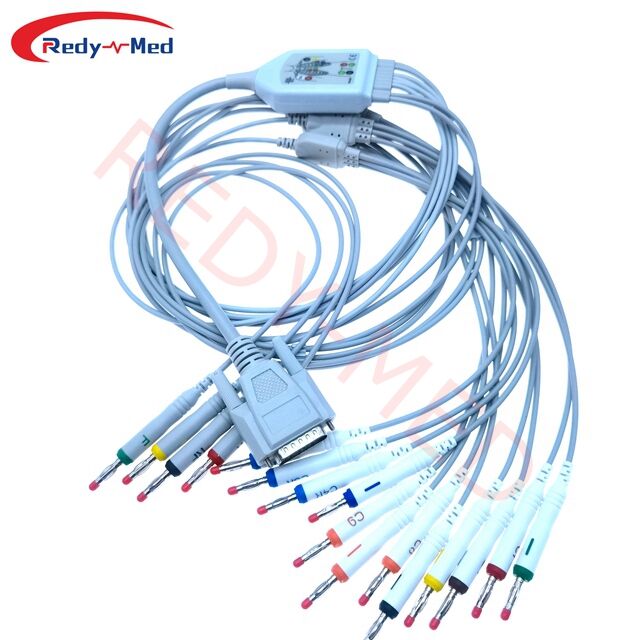
Why EKG Cable-Monitor Compatibility Directly Impacts Diagnostic Accuracy
When EKG cables don't match properly with their monitors, it creates serious problems for heart monitoring. These mismatch issues create all sorts of signal noise that hides what's really going on in the heart rhythm, sometimes triggering fake arrhythmia warnings or worse, missing dangerous conditions altogether. Research published in the Cardiovascular Engineering Journal back in 2022 showed something pretty alarming too. They discovered that when cables have wrong impedance levels, the waveforms get distorted around 40% more in places where there's lots of electrical interference, such as intensive care units. This kind of distortion can literally slow down necessary medical responses during emergencies.
How Mismatched Cables Cause Artifacts, False Alarms, and Missed Arrhythmias
Three primary failure modes occur with incompatible setups:
- Baseline wander: Loose connectors introduce low-frequency noise that mimics ST-segment elevation
- 60Hz interference: Inadequate shielding picks up electromagnetic interference from nearby hospital equipment
- Signal attenuation: Impedance mismatches weaken P-wave amplitude, obscuring atrial arrhythmias
These artifacts trigger false ventricular tachycardia alarms in 17% of cases (Journal of Clinical Monitoring, 2023), while simultaneously masking true ventricular fibrillation in noisy clinical settings.
Impedance Matching, Shielding, and Noise Rejection in Real-World Clinical Environments
Effective signal integrity relies on three engineering principles:
| Feature | Function | Performance Impact |
|---|---|---|
| Impedance Matching | Aligns cable/monitor electrical resistance | Prevents signal reflection (90% reduction in ring artifacts) |
| Triple Shielding | Blocks EMI from infusion pumps/MRI | Lowers noise floor by 30dB (AHA 2022 standards) |
| Twisted Conductors | Cancels magnetic interference | Reduces crosstalk by 60% vs. flat cables |
Without these safeguards, ambient hospital noise overwhelms microvolt-level cardiac signals. Properly matched systems maintain diagnostic confidence even during emergency transport or electrocautery procedures.
Matching Lead Configuration: 3-Lead, 5-Lead, and 12-Lead EKG Cable Requirements
Clinical Indications Driving Lead Count Selection (e.g., Telemetry vs. Resting EKG)
The way EKG leads are set up really depends on what doctors need to see clinically. Three lead setups work great for keeping an eye on heart rhythms in patients who are moving around, catching those basic irregularities and tracking how fast the heart is beating over time. When we move to five leads, adding those chest electrodes gives us better chances of spotting problems related to blood flow through the heart muscle. For full picture assessments though, nothing beats the twelve lead system. It captures heart activity from all directions at once, giving clinicians detailed information about waveforms that can indicate serious issues like heart attacks. Choosing which leads to use isn't random at all. Clinicians pick based on their main goals: do they want ongoing monitoring, quick assessment during emergencies, or thorough evaluation for accurate diagnosis?
Hardware & Firmware Constraints: When a '12-Lead Compatible' Monitor Only Processes 3 Leads
The specs on monitors can hide some real limitations even if the connectors look like they fit together. Take those devices marked as "12-lead compatible" for instance. Many of them actually handle only about three leads inside because of firmware issues or simply not enough analog to digital conversion channels available. And there's another problem too. Some systems start cutting corners when multiple monitors are connected at once, which reduces the overall resolution quality. What happens then? Well, these limitations create outputs that aren't quite accurate. Just because there are twelve physical connection points doesn't mean all leads are properly captured. Often what we get instead is mathematical approximations of missing data rather than actual measurements taken directly. Before buying any equipment, it's really important to check what the device actually does with those leads in practice, not just whether the connectors match up according to the spec sheet.
Connector Standards, Proprietary Locks, and the Reality of EKG Cable Interchangeability
Decoding Common Connector Types (LEMO, DIN, Mini-DIN, RJ-Style) and Their Pinout Logic
Standardized connectors—including DIN (10-pin) and LEMO—are widely used in hospital EKG systems, yet proprietary designs from major manufacturers create significant interoperability barriers. Each follows distinct pinout logic:
- DIN connectors assign specific pins to limb and precordial leads
- LEMO variants incorporate locking mechanisms optimized for critical care mobility
- RJ-style ports typically handle telemetry data transmission, not raw EKG signals
Mismatched pin assignments between cables and monitors cause signal inversion or lead dropout. For example, reversed RA/LA pins produce limb lead reversals—a factor in 12% of diagnostic errors (Journal of Cardiology, 2023).
Risks of Third-Party Adapters: Signal Degradation, Latency, and Regulatory Gaps (FDA 510(k))
Non-certified adapters introduce three clinically significant risks:
- Signal degradation: Impedance mismatches above 500mΩ distort ST-segments and obscure subtle ischemic changes
- Processing latency: Analog-digital conversion delays can mask transient arrhythmias such as brief ventricular tachycardia
- Regulatory voids: 68% of third-party adapters bypass FDA 510(k) validation (Cardiology Tech Review, 2024)
This creates dangerous blind spots—where artifact mimics STEMI or masks pacemaker spikes. While universal adapters promise interoperability, their use voids monitor warranties and violates Joint Commission standards for equipment management in acute care.
Frequently Asked Questions (FAQ)
Why is impedance matching important for EKG cables?
Impedance matching is crucial for aligning the electrical resistance between the cable and monitor, preventing signal reflection that can lead to diagnostic inaccuracies.
What are the consequences of using mismatched EKG cables?
Mismatched cables can cause artifacts, false alarms, and missed arrhythmias, impacting the reliability of diagnostic data and potentially leading healthcare providers astray.
How do third-party adapters pose risks in EKG systems?
Third-party adapters can introduce signal degradation, processing latency, and lack of regulatory validation, leading to dangerous blind spots in diagnosis.
Do all 12-lead compatible monitors process all 12 leads?
No, some monitors marked as "12-lead compatible" may not process all 12 leads due to firmware limitations or inadequate conversion channels, affecting diagnostic accuracy.