 EN
EN

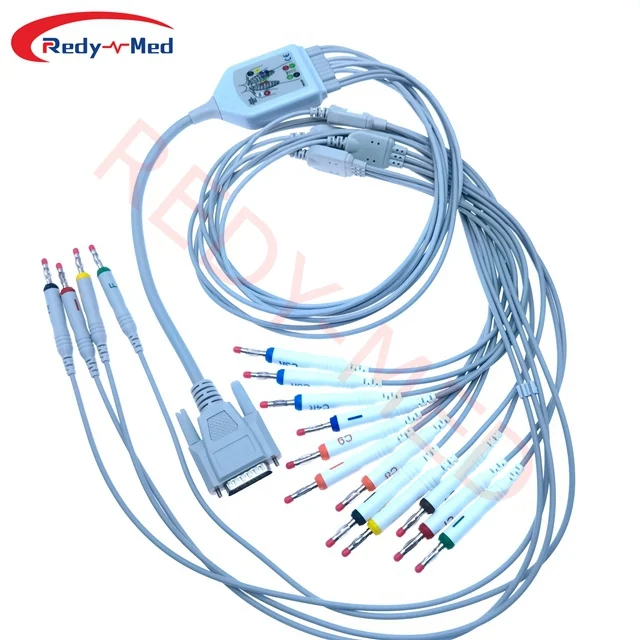
Clinical Signal Integrity and Daily Operational Challenges
In high-pressure clinical environments, diagnostic accuracy hinges entirely on the clarity of signal transmission between patient sensors and bedside diagnostic equipment. Biomedical engineers and nursing directors regularly report that baseline wander, high-frequency electromagnetic noise, and trace dropouts are primary sources of telemetry failure. During critical patient transfers from emergency triage to surgical units, a compromised ekg cable easily triggers false alarms or conceals subtle ST-segment elevation indicators. Clinical staff often face immense frustration when cable flex fatigue causes intermittent connectivity during routine patient movement and repositioning. Replacing damaged ekg cable units piecemeal creates inventory chaos, as different hospital departments end up with mixed accessory brands of varying wire quality and shielding performance. When an unshielded or worn ekg cable introduces baseline noise, physicians are forced to repeat diagnostic runs, increasing patient anxiety and extending overall stay durations. To prevent operational bottlenecks, modern healthcare managers require durable hardware that withstands aggressive daily handling, continuous flex cycles, and frequent wipe-downs with medical disinfectants. Recognizing the direct relationship between a durable ekg cable and clinical diagnostic speed allows hospital networks to improve overall patient care standards while significantly lowering daily troubleshooting calls for engineering teams.
Engineering Excellence in Signal Shielding and Material Choice
Designing a resilient ekg cable requires advanced material selection and meticulous mechanical engineering to endure harsh clinical demands. High-performance medical cables utilize outer jackets crafted from medical-grade thermoplastic polyurethane, offering superior abrasion resistance and chemical durability compared to standard polyvinyl chloride coatings. Inside the cable jacket, high-tensile Kevlar aramid fiber cores provide structural reinforcement that prevents internal wire stretching when cables are accidentally yanked during emergency room transfers. Electrocardiogram signals operate at low microvolt amplitudes, making them particularly vulnerable to interference from nearby electrocautery units, infusion pumps, and mobile telemetry transmitters. To preserve signal integrity, an engineered ekg cable incorporates a double-shielding architecture consisting of a high-coverage tinned copper braid paired with conductive aluminum foil wrapping. This structural design delivers high common-mode rejection ratios and shields delicate physiological signals from external radiofrequency noise during real-time cardiac analysis. Furthermore, connectors must utilize multi-pin gold contacts to minimize contact impedance and resist surface oxidation through thousands of insertion cycles. Conformance to ANSI/AAMI EC53 guidelines and IEC 60601 safety standards ensures that every ekg cable delivers precise waveform fidelity for exact P-wave, QRS complex, and T-wave analysis. Selecting an ekg cable manufactured with these technical safeguards protects sensitive diagnostic devices and dramatically reduces premature cable failure rates.
Standardizing Cardiac Monitoring Across Diverse Healthcare Departments
Healthcare networks frequently operate a diverse mix of specialized departments, ranging from pediatric care units and intensive care units to outpatient cardiology clinics. Managing separate patient monitoring supplies for each department leads to excessive inventory costs, stock confusion, and potential setup mistakes during urgent care transitions. Implementing a standardized ekg cable system across an entire healthcare facility streamlines clinical workflows and simplifies staff training programs. Emergency departments require fast-latching trunk cables, whereas long-term telemetry units prioritize flexible, lightweight lead wire configurations for patient comfort. Choosing a modular ekg cable family featuring interchangeable trunk systems and multi-brand adapter blocks allows clinical engineering teams to support various monitor models from different equipment manufacturers without replacing entire cable assemblies. This operational standardization enables clinical staff to transfer patients from paramedics to emergency suites and telemetry wards using a single unified lead configuration. Standardizing on a high-reliability ekg cable cuts down on setup delays, reduces human error in lead placement, and minimizes equipment downtime across the entire facility. Additionally, standardized ekg cable inventory simplifies emergency replenishment schedules and lowers overall carrying costs for central supply and materials management departments.
Procurement Economics and Supply Chain Streamlining
Balancing healthcare operational budgets requires hospital procurement teams to evaluate component longevity alongside initial purchasing costs. Ordering an ekg cable in bulk provides substantial volume discounts, lowers unit freight expenses, and guarantees consistent stock availability across all medical wings. Sudden stockouts of vital monitoring consumables interrupt clinical services, delay non-emergency surgeries, and force expensive rush delivery orders. Establishing long-term bulk agreements for an essential ekg cable supply creates a predictable inventory buffer against global supply chain bottlenecks and unexpected raw material shortages. Bulk purchasing also helps biomedical engineering departments implement standardized replacement schedules, making it far easier to track asset lifespans and schedule preventive maintenance routines. When clinics order an ekg cable in bulk from a reliable manufacturing source, they ensure uniform manufacturing batch quality, which eliminates voltage variation issues across bedside monitors. Strategic bulk ekg cable procurement transforms routine consumable purchasing into a streamlined financial plan that maximizes hospital capital efficiency while keeping clinical teams fully equipped with reliable cardiac sensors.
Quality Assurance and Sustainable Manufacturing Partnerships
Maintaining long-term clinical safety and operational performance requires partnering with certified manufacturers dedicated to rigorous quality control standards. Every ekg cable deployed in medical environments must comply with strict ISO 13485 quality management systems and ISO 10993 biocompatibility testing to ensure safety during prolonged skin contact. Modern healthcare providers need customizable solutions, including specific cable lengths, custom connector mold designs, color-coded lead configurations, and proprietary pinouts for specialized ekg cable configurations on legacy monitoring systems. Redy-Med meets these specialized industry needs by delivering advanced diagnostic cable manufacturing, robust OEM engineering capabilities, and responsive global supply chain solutions. Through automated pin-soldering, high-voltage insulation testing, and strict mechanical flex testing, Redy-Med ensures that every ekg cable maintains uncompromised signal fidelity and exceptional physical durability under heavy hospital usage. Partnering with Redy-Med empowers healthcare networks and medical distributor partners to optimize bulk ekg cable orders, secure reliable inventory, and enhance diagnostic confidence across diverse clinical settings.
Table of Contents
- Clinical Signal Integrity and Daily Operational Challenges
- Engineering Excellence in Signal Shielding and Material Choice
- Standardizing Cardiac Monitoring Across Diverse Healthcare Departments
- Procurement Economics and Supply Chain Streamlining
- Quality Assurance and Sustainable Manufacturing Partnerships